Why “responsible AI” has become a governance requirement
A familiar pattern has emerged: the model looks great in a demo, then compliance asks how it was trained, what data it saw, who approved it, and what happens when it fails. “Responsible AI” is the name teams give to answering those questions with evidence, not assurances. The shift happened because ML and GenAI now influence pricing, eligibility, hiring, medical workflows, and customer communications—areas where errors create legal exposure, reputational damage, and real customer harm.
Regulators and auditors increasingly treat models like any other controlled system: you need traceability, decision rights, and ongoing monitoring. Even when no law forces the issue, procurement and security reviews do—vendors are asked for risk assessments, test results, and incident processes before production access is granted.
Documentation, reviews, and monitoring add time and tooling cost. But without them, teams rely on informal judgment, and every launch becomes a one-off debate instead of a repeatable, auditable process that lets you ship faster with fewer surprises.
What model governance looks like when it’s actually working

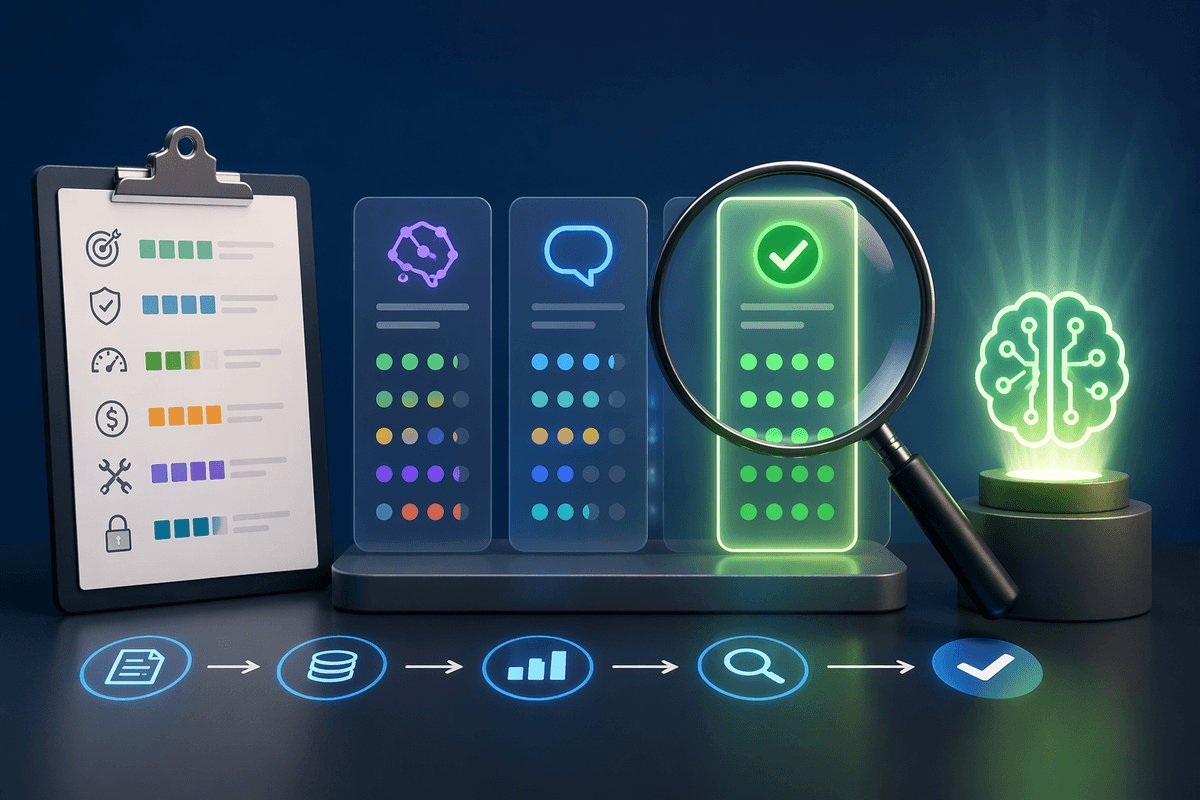
In organizations where model governance works, shipping a model feels similar to shipping any controlled change: you can point to a single record that explains what changed, why it changed, what data and prompts were used, and what tests were run. A risk review is not a meeting where people trade opinions; it is a decision backed by documented thresholds (for example, minimum performance by segment, privacy checks completed, and red-team results attached). Approvals are explicit and role-based, so “who can override” is clear before a launch is under pressure.
The operational tell is that evidence is produced as a byproduct of delivery. Model cards, data lineage, evaluation reports, and deployment configs are generated from the same pipeline that trains and releases the system, making audits mostly retrieval work. You will spend time standardizing templates, integrating tools, and training reviewers. That cost is typically lower than repeated ad hoc reviews and emergency rollbacks.
Map the real risks: fairness, privacy, safety, and drift
A common failure mode is treating “risk” as a single box to check, when the risks behave differently and need different tests. Fairness issues show up when outcomes vary by protected or meaningful segments, even if overall accuracy is high. Privacy risk is about whether training data or user inputs can be exposed through logging, prompts, model outputs, or vendor access. Safety risk is whether the system can generate harmful instructions, defamatory content, or confidently wrong guidance in sensitive workflows.
Drift is the risk that none of your launch evidence stays true. Data distributions change, user behavior shifts, and upstream systems get modified without telling the model team. The practical move is to map each risk to concrete signals and thresholds: segment-level metrics for fairness, retention and access controls for privacy, misuse and hallucination rates for safety, and feature/data quality checks for drift. The constraint is measurement cost—segment labels may be unavailable, red-teaming takes time, and monitoring adds tooling and on-call load.
Define roles and decision rights before you ship anything
A release gets messy when “responsible” work is everyone’s job and no one’s decision. Under deadline, that turns into implied approvals, Slack debates, and last-minute sign-offs from people who were never asked to define criteria. The fix is to treat a model launch like any other controlled change: name owners, give them authority, and define what evidence they need to say yes.
Start with a small set of accountable roles: a product owner who accepts business risk, a model owner who is accountable for performance and drift controls, a data owner who can attest to source and permitted use, and independent reviewers for privacy/security and fairness/safety. Make decision rights explicit: who can approve production access, who can approve new data sources or prompt changes, and who can grant exceptions (and for how long). Require that exceptions create a ticketed risk acceptance with an expiry date.
If the same two people must review everything, governance becomes a bottleneck, so define “low/medium/high” change types with different approval paths and escalation rules before the first launch.
Build governance into the deployment pipeline, not a checklist
The recognizable anti-pattern is the “governance sprint” right before launch: a folder of screenshots, a model card filled in from memory, and a retroactive search for who signed off on what. That work feels slow because it is. The evidence is being manufactured after decisions were already made, so every missing artifact becomes an interruption and every reviewer question becomes rework.
Instead, make governance outputs the default outputs of the same pipeline that trains, evaluates, and deploys. Treat each release candidate as a package: a pinned dataset snapshot and feature schema, versioned prompts/system instructions, reproducible evaluation runs (including segment checks where available), and a risk record that links to privacy/security reviews and red-team findings. Gate promotion to staging/production on machine-checkable criteria where possible (tests passed, required reviewers approved, exception ticket present), and make the pipeline write an immutable change log.
CI/CD, experiment tracking, and approval workflows rarely line up out of the box, and teams may need to slow down briefly to standardize templates and automation. The payoff is that “doing the right thing” becomes the easiest path, not a separate process that only shows up when auditors ask.
Monitoring in production: prove the model stays within bounds

The model that passed every pre-launch test can still become non-compliant once real traffic hits it. A pricing model can drift as customer mix changes. A support chatbot can start leaking sensitive details because users discover prompt patterns that bypass safeguards. Monitoring is how you turn “we tested it” into “it is still behaving as approved,” with evidence that is time-stamped and reviewable.
Start with a small set of operational guardrails tied to the risks you mapped: data quality checks (missingness, schema breaks, out-of-range values), performance and calibration on a holdout stream where labels exist, and segment-level error rates when segmentation is permitted and measurable. For GenAI, track safety signals like policy-violation rate, jailbreak attempts, refusal/deflection rate, and groundedness or citation coverage in workflows that require it. Log prompts and outputs with privacy controls (redaction, minimization, retention limits), and alert on threshold breaches with a defined “stop, degrade, or continue” playbook.
The reliable labels are slow, logs are sensitive, and on-call noise is real. Teams usually need to accept fewer, higher-quality alerts and invest in periodic review (weekly sampling, targeted red-teams) to keep monitoring actionable instead of performative.
Putting it together: a responsible deployment roadmap teams can follow
A useful roadmap looks like a release train with defined gates. Start by classifying the change (new model, new data, prompt/tooling change, threshold tweak) and assigning the approval path. Then package the release candidate: pinned data/prompt versions, evaluation and red-team results, privacy/security checks, and an explicit risk decision (approve, approve with time-bound exception, or block). Promote only if required roles have approved and machine-checkable criteria pass.
After launch, treat monitoring as the final gate: dashboards tied to pre-set thresholds, an incident playbook, and a weekly evidence review that can trigger rollback or scope reduction. The constraint is resourcing: you may need to limit model variants and raise the bar for “high-risk” changes to keep review and on-call load sustainable.