When we talk about Artificial Intelligence, most people instantly imagine robots, voice assistants, or self-driving cars. But behind these amazing technologies lie networks that quietly do the heavy lifting — Artificial Neural Networks (ANN), Convolutional Neural Networks (CNN), and Recurrent Neural Networks (RNN). These systems don't just "think" in one uniform way. Each one has a special method for processing information, learning patterns, and making decisions. Understanding their differences can help clear up some of the confusion about how machines "think" and why certain models are better suited for specific tasks.
Knowing the basics of ANN, CNN, and RNN is like having a map before exploring unknown territory. It makes everything that follows feel a little less overwhelming and a lot more logical.
What is an ANN?
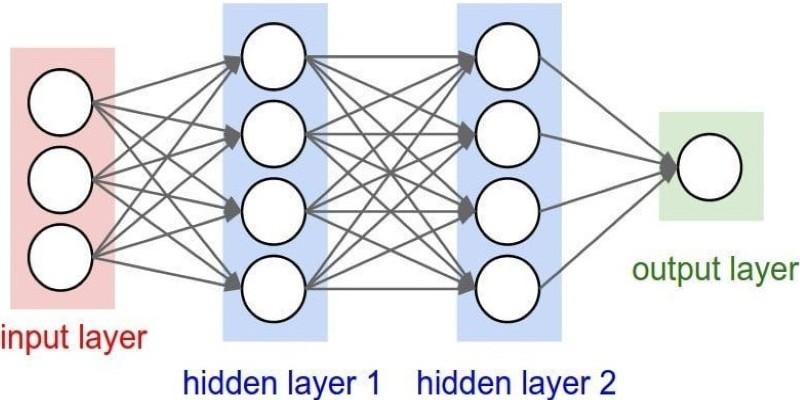
Artificial Neural Networks, or ANNs, are like the basic skeleton of deep learning models. Inspired by the human brain, they are made up of layers of interconnected nodes called neurons. Each connection has a weight that adjusts as learning happens.
When data enters an ANN, it moves from one layer to another, getting processed at each stage. These networks are typically used for tasks like basic image classification, spam detection, and simple forecasting problems.
The way an ANN works is pretty straightforward. It receives input, multiplies it by some weights, adds a bias, and pushes it through an activation function that decides whether the next neuron will "fire" or not. That's it. Nothing too fancy, but it's extremely effective when the problem isn't too complex.
One thing to remember is that ANNs don't have any special tricks for recognizing patterns in space (like images) or sequences (like language). They simply treat every piece of input as a flat list of numbers.
What is CNN?
If an ANN is the skeleton, then Convolutional Neural Networks, or CNNs, are the muscles specifically built for seeing. CNNs were designed to handle visual data, like photos and videos, much better than regular ANNs could.
The key difference? CNNs use something called a convolutional layer. Think of it like a small window that scans across an image and picks out important features — edges, corners, textures, or shapes. Instead of trying to process the whole image at once, the network looks at small parts and builds up a picture piece by piece.
This small but powerful idea gives CNNs two major advantages: they need fewer parameters to learn (making them faster and easier to train), and they can spot patterns anywhere in the image, not just at specific spots.
CNNs are the reason you can unlock your phone with your face or see automatic photo tags on social media. The technology behind them is what gives machines the "eyes" to recognize what's in a picture.
CNNs often have three main layers: convolutional layers that detect features, pooling layers that reduce the amount of data, and fully connected layers that make the final prediction. Each layer has its role, and together, they allow CNNs to excel at tasks like object detection, image classification, and even artistic style transfer.
What is RNN?
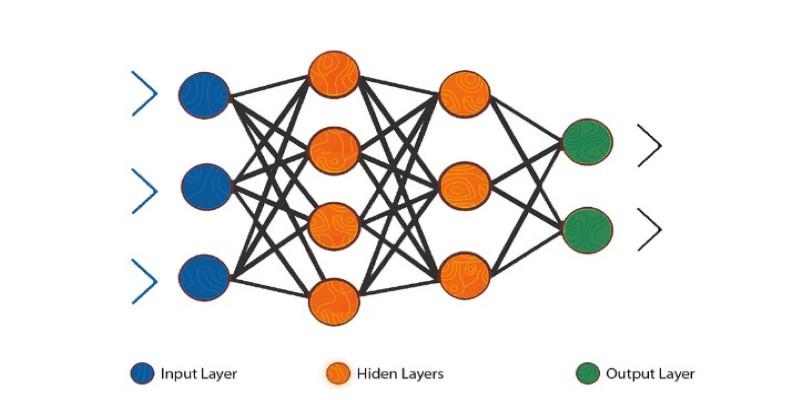
Recurrent Neural Networks, or RNNs, are a completely different story. While ANNs and CNNs look at inputs independently, RNNs remember what they’ve seen before.
This memory allows them to understand sequences — like sentences, time-series data, or audio. Instead of processing all inputs separately, an RNN passes information from one step to the next, creating a "chain" of memories.
Imagine reading a paragraph. You don’t treat each word on its own; you understand words based on the ones that came before. That’s exactly how RNNs work.
In a traditional RNN, the network has loops that let information persist. So, when processing a sentence, the network doesn't just think about the current word — it thinks about all the previous words, too. This makes RNNs perfect for things like language translation, speech recognition, and text generation.
However, RNNs are not without their challenges. They can sometimes forget things over long sequences, leading to a problem known as "vanishing gradients," where earlier information gets lost. That’s why newer models like LSTM (Long Short-Term Memory) and GRU (Gated Recurrent Unit) were introduced — to help RNNs hold onto information longer.
How ANN, CNN, and RNN Compare
Now that you know what each one does, let’s stack them side by side for a better view.
Feature | ANN | CNN | RNN |
|---|---|---|---|
Input Type | Flat data | Grid-like data (images) | Sequential data (time series, text) |
Main Strength | Basic pattern recognition | Feature extraction from images | Understanding sequences and context |
Key Component | Fully connected layers | Convolutional and pooling layers | Loops and memory connections |
Example Use | Spam detection | Face recognition | Language translation |
Weakness | Can’t handle spatial or sequential patterns well | Struggles with time-based data | Forgetfulness over long sequences (fixed with LSTM/GRU) |
Each network is built to solve a different kind of problem. You wouldn't use a CNN to predict stock prices or an RNN to recognize cats in photos — not because they can't, but because other networks do the job better.
Wrapping It Up
In the world of neural networks, ANN, CNN, and RNN each have their own specific strengths and areas where they shine. ANNs are often the first choice when you're working with simpler data that doesn’t have a natural structure, like basic numerical inputs. CNNs are the experts when it comes to understanding visual information, making them perfect for image-related tasks.
RNNs, with their ability to remember previous inputs, are built for anything that involves sequences, like language or time-series data. Even though they all share a common foundation, their unique structures shape how they learn and solve problems. Choosing the right model means matching the network to the nature of your data and the goals you want to achieve.