Modern enterprises require not only speed but also intelligence, consistency, and autonomy. Agentic automation leverages artificial intelligence, automation, and data to create autonomous systems that can think and act independently. It goes beyond rule-based workflows by enabling intelligent decision-making at every level of the organization. These systems interact seamlessly, enabling real-time business orchestration.
Automating individual tasks is merely the first step toward transforming processes into dynamic, self-optimizing ecosystems. Companies that implement well-coordinated smart systems outperform their competitors through faster response times, improved collaboration, and more efficient resource utilization. This guide explores how agentic automation enables a future-ready business built on intelligent, coordinated infrastructure. Learn how to build a robust framework using smart agents to orchestrate operations with exceptional precision and autonomy.

Understanding Agentic Automation in Business Environments
Systems that behave autonomously according to objectives and circumstances are referred to as agentic automation. These agents don’t follow conventional scripts. They can cooperate with other systems, make informed decisions, and adjust in real-time. Smarter execution and fewer manual tasks are advantageous to businesses. In businesses, agentic automation enhances productivity in areas such as finance, human resources, and logistics. Agents comprehend intent and adjust as necessary, in contrast to strict workflows.
An AI agent can automatically update inventory, alert vendors, and modify prices. Feedback helps these agents learn, increasing the effectiveness of each cycle. As more businesses use these technologies, it’s critical to comprehend how they’re internally designed. A smooth rollout is further supported by integration with cloud platforms and enterprise resource planning. Businesses should establish the necessary infrastructure to facilitate large-scale, distributed decision-making with agentic intelligence integrated into key processes.
Key Components of an Orchestrated Enterprise Framework
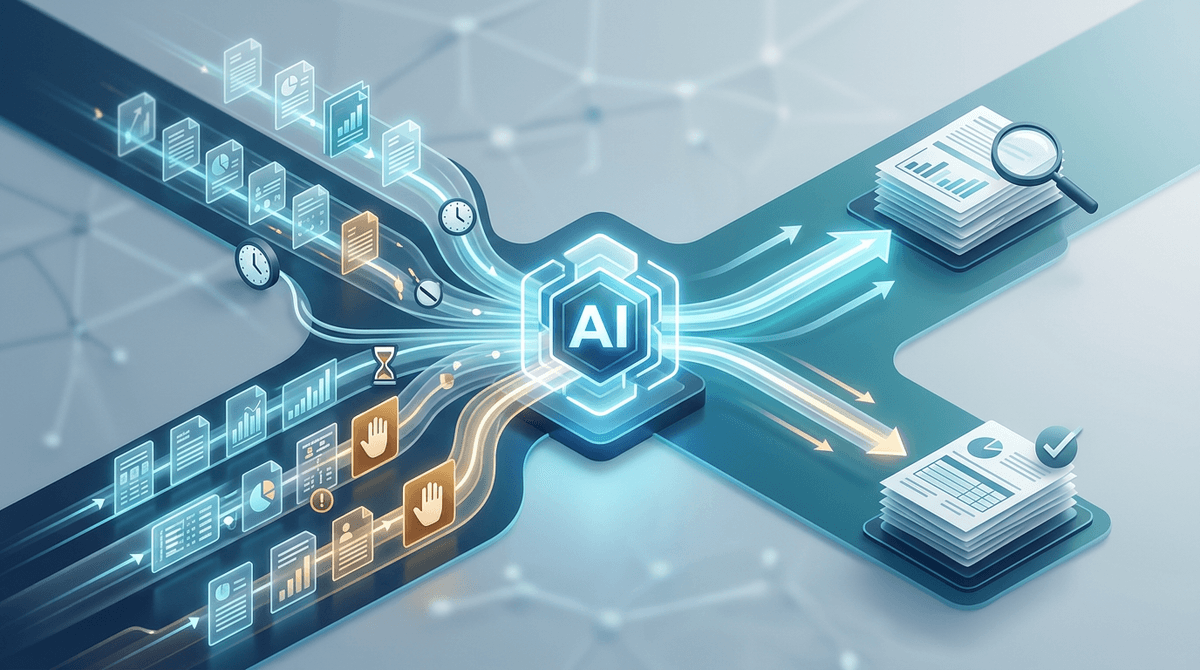
Several key components are essential for an AI-enabled, orchestrated enterprise. These consist of smooth system integration, centralized data governance, and intelligent agents. When data silos are eliminated, intelligent agents perform at their best. The digital backbone comprises machine learning models, cloud systems, and APIs. Every system communicates with every other system, exchanging information and directives. Both humans and machines can communicate with these agents. They carry out tasks, analyze data, and adjust to events as they happen.
Agents can learn from results, but they can also be embedded with business rules. Workflows become flexible rather than static. It promotes adaptability, resilience, and ongoing development. Real-time visibility is another key component of an AI-enabled orchestrated enterprise. Dashboards display the operation of each process. Errors are quickly identified and fixed. Full synchronization—where people, platforms, and processes function as a single, integrated entity under the direction of intelligent agent orchestration—is the aim.
Benefits of Adopting Agentic Automation Across Operations
Businesses can achieve quantifiable gains by implementing agentic automation. By performing repetitive tasks precisely, it lowers errors. Workers focus more on strategy and less on routine tasks. Predictive solutions to issues enhance business continuity and resilience. For instance, an agent can immediately reroute orders and identify shipment delays. This responsiveness increases customer satisfaction. Agents that support growth without adding to the workload enable automation for business scalability. Businesses can increase agility, launch more quickly, and serve more clients. Another significant advantage is cost savings.
AI agents support the optimization of customer service, inventory levels, and energy use. Better data management leads to quicker and more intelligent decisions. Money-losing errors are decreased. Additionally, agentic automation enhances consistency across the organization, ensuring that every process aligns with predefined objectives. Ultimately, agentic automation fosters accuracy, speed, and reliability at every stage of the process.

Implementation Strategy for Agentic Automation
Businesses must start with a well-defined plan before implementing agent-based automation. Determine which areas require repetitive tasks first. Procurement, reporting, and customer service are the best options. Next, construct the appropriate AI infrastructure. Select platforms that facilitate real-time processing and multi-agent orchestration. Integration is essential. Ensure smooth data flow by connecting current systems via APIs. Improved accuracy is guaranteed when models are trained using historical data.
Collaborating with AI agents also requires training for teams. Workflows can be tested in a pilot program before being fully rolled out. The system must have feedback loops. Over time, intelligent agents evolve and acquire new capabilities. Governance remains essential—organizations must establish clear guidelines and boundaries for AI-driven decision-making. Verify adherence to internal policies and regulations. Plan big, but start small. Enter new markets after every rollout is successful. A well-managed, scalable strategy ensures long-term success.
Challenges and Solutions in Enterprise-Wide Automation
Agentic automation in businesses has drawbacks despite its benefits. One of the biggest challenges is data fragmentation. Coordination is challenging in siloed systems. Centralizing data access and moving to the cloud are the answers. Another issue is security. To avoid data breaches, agents must adhere to stringent access guidelines. Tools for identity management and encryption are helpful. Change management is also important. Workers might worry about losing authority. Resistance is lessened by training and open communication.
AI decision-making raises ethical questions as well. Transparent governance models ensure accountability. Cost also plays a role. Infrastructure construction can be costly. Phased rollouts, however, reduce risk. Prioritize high-impact areas. Then, depending on the outcomes, scale up. Unexpected behavior is avoided through testing and observation. These problems can be solved with the correct tactics. Orchestrated automation gives businesses that overcome these obstacles long-term competitive advantages.
Future Outlook of Orchestrated Enterprises
AI-powered, orchestrated enterprises have a bright future. Even more intelligent agents will be developed through advancements in machine reasoning and natural language processing. These agents will anticipate needs and take action rather than merely reacting. Businesses will transition from reactive to proactive operations. The norm will be hyperautomation. AI-driven orchestration will power every system, including supply chain and human resources.
As agents oversee departmental workflows, cross-functional cooperation will improve. Governance and ethics in AI will also change. Decisions will be explained by future systems, increasing the transparency of AI. Multinational corporations will adopt decentralized models. With centralized supervision, each regional office may have its agents. The workforce will evolve, with a focus on judgment, creativity, and innovation. The orchestrated enterprise will be faster, smarter, and more flexible than ever before as technology continues to advance.
Conclusion:
Enterprise agentic automation is already transforming operations—it’s no longer a futuristic concept. Intelligent agents synchronize processes across platforms, driving scalable automation throughout the business. Businesses that use this model benefit from seamless orchestration, increased efficiency, and real-time insights. Businesses can operate more intelligently and adapt more quickly thanks to the AI-enabled orchestrated enterprise. Any organization can benefit from strategic implementation, well-defined objectives, and the right technology. Investing in this change entails preparing for a future that is more intelligent, flexible, and responsive. Set out on the path to an agentic, automation-powered, fully orchestrated enterprise right now.