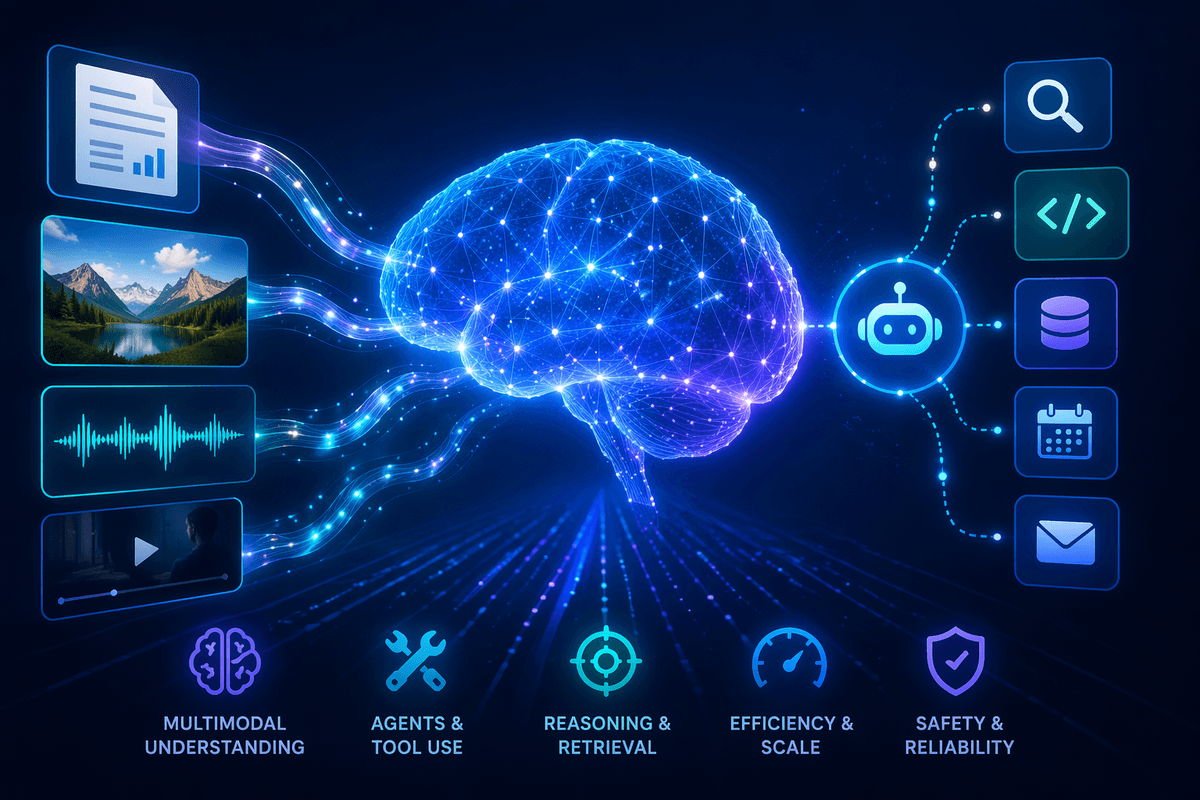
Artificial intelligence has crossed the threshold from research novelty to operational tool. It's in supply chains, medical imaging systems, customer support layers, logistics forecasts, and code generation pipelines. The core challenge is no longer about proving AI can work. It's about deciding how to use it responsibly, how to scale it efficiently, and how to balance risk with benefit. What’s emerging now is not a single direction but several threads, each shaped by technical constraints, economic pressures, and policy reactions. Understanding these trends isn’t about following hype. It’s about paying attention to where hard problems are showing up.
Scaling Models Isn’t Just About Size Anymore
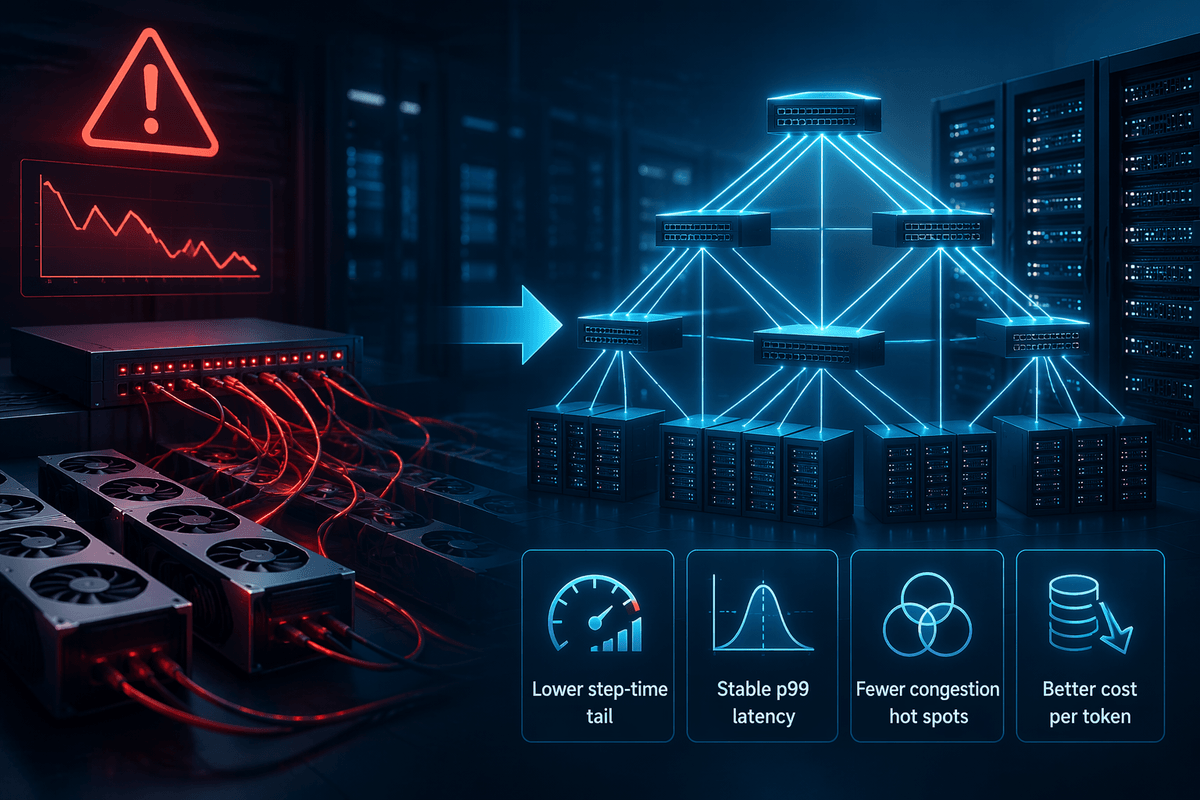
In the earlier stages of AI development, pushing model size upward often led to performance gains. That pattern has slowed. The key limits now sit elsewhere. Inference cost has become one of the most serious constraints. Running high-capacity models like GPT-4 or Claude 3 at scale forces teams to weigh GPU resource use against response time. Latency expectations vary by industry, but few applications can afford multi-second delays or unpredictable outages when systems time out.

This shift has opened the door to sparse architectures. Mixture-of-Experts models, for example, route inputs through selective pathways, activating only a few specialized parts of the model each time. This cuts compute demand significantly but adds routing complexity, uneven performance across tasks, and challenges during retraining. Maintaining coherence between different expert pathways is a constant tension in these systems.
At the same time, distillation is seeing broader adoption. Developers use large models to train smaller replicas tailored to specific roles. These distilled models cost less to run and are easier to control. But they introduce risks. Behavioral drift can occur as the copy diverges from its source, especially in scenarios where precision and trust are mandatory.
Data Quality is a Bottleneck for Improvement
Performance gains are increasingly tied to data quality rather than novel architecture. Synthetic data is being used more often to augment or clean up training datasets, but it brings its own risks. If the synthetic data is generated from similar models, feedback loops can form. This leads to overfitting on artificial patterns rather than broader generalization.
In real-world deployments, especially in healthcare or financial services, access to clean, labeled, and representative datasets remains a major issue. Models trained on general web-scale corpora often need significant domain adaptation before they are useful in narrow tasks. Fine-tuning with high-quality, task-specific data helps, but it isn't a silver bullet. Overfitting during fine-tuning is a persistent issue, particularly when data volume is low.
Retraining cycles introduce operational costs. Deciding when to update a model and how to validate improvements takes time. Shadow deployments, where the new model runs in parallel with the old one, are common but require careful monitoring. Many teams now focus more on data pipeline governance than model architecture itself, knowing that upstream issues in data labeling or sampling can degrade performance downstream.
Regulation and Interpretability Will Shape Development
Policy around AI use is tightening. In regions like the EU, the upcoming AI Act sets constraints around how systems are audited, classified by risk, and monitored in deployment. This shifts the development focus toward transparency and documentation. Model interpretability is no longer an academic exercise—it’s becoming a requirement for compliance in regulated environments.

Post-hoc interpretability tools like SHAP or LIME help explain individual predictions but fall short in large language models, where outputs are generated token by token with high interdependence. That’s pushing research into internal concept attribution, probing latent space activations, and developing custom internal metrics that approximate human-aligned reasoning.
Auditing large models involves tracking not only what they produce but how they fail. Undesired memorization, biased outputs, or hallucinated facts must be caught reliably. Logging systems that record prompt-response pairs, confidence levels, and fallback triggers are becoming part of standard architecture, especially in customer-facing tools.
Expect interpretability to factor into procurement as well. Enterprises selecting between models will look beyond performance benchmarks to how well the system can be understood, monitored, and debugged in high-stakes situations.
Smaller, Specialized Models Are Gaining Ground
While frontier labs continue to release large general-purpose models, many organizations are moving in the opposite direction: building smaller models trained on specific domains or task types. The reason is simple—cost and control. A compact model trained for one job often outperforms a general model forced into the same role through prompt engineering.
These models are easier to deploy on edge devices, mobile apps, or in low-connectivity settings. They’re also easier to audit and fine-tune. For example, a legal AI assistant trained on regulatory filings and case law may need only a few billion parameters to match or exceed the performance of a much larger general-purpose model in that context.
Local deployment is another factor. Running models on-device without sending data to the cloud reduces latency and addresses privacy concerns. This matters in sectors like defense, automotive, and healthcare, where data exposure risks are high.
Training smaller models still involves trade-offs. You give up breadth of capability, and the margin for error shrinks when data quality dips. There’s also a growing dependency on high-quality open weights. If smaller labs can’t access these, they end up locked out of the ecosystem.
Large models aren’t going away, but the market is moving toward a hybrid structure. Centralized models handle general tasks or multi-step reasoning. Specialized models cover high-precision roles. Coordinating between them is becoming a new engineering layer, with orchestration systems deciding which model to call for each input.
Conclusion
The future of AI isn’t a straight line toward bigger models or general intelligence. It’s a series of branching decisions shaped by practical limits and strategic choices. The focus is shifting toward efficiency, reliability, domain specificity, and accountability. That doesn’t mean progress is slowing. It means success depends less on breakthroughs and more on how well teams align tools with their context. Deployment cost, regulatory friction, and data access are becoming the new benchmarks. What matters most is not raw potential but real-world fit. Those building AI today are solving for the constraints that define tomorrow.